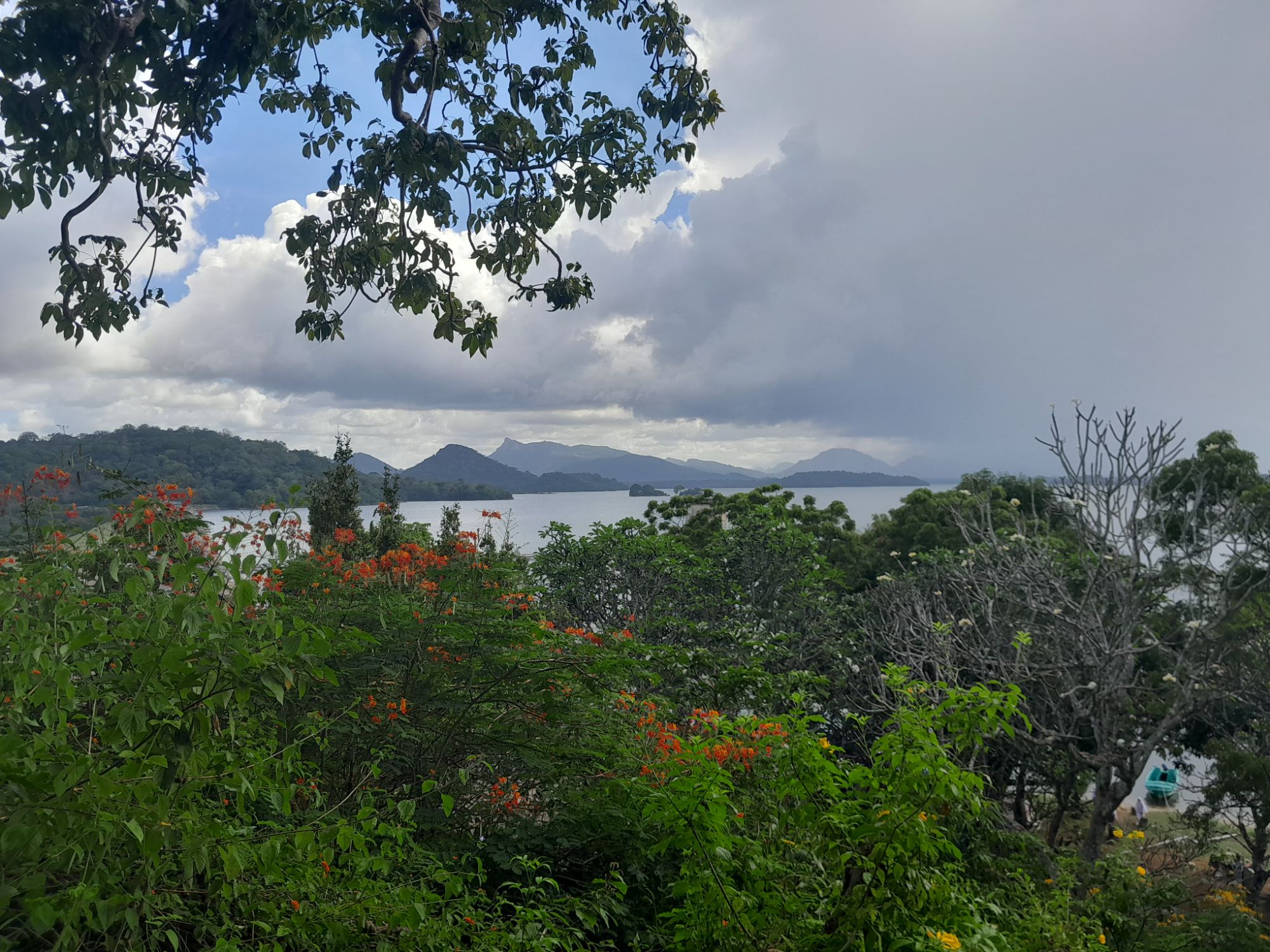
On a lovely, gloomy, rainy afternoon, I visited Inginiyagala reservior, out of curiosity. It was not a long journey as at the time I was working in the east cost of Srilanka in the town of Batticaloa. To give you an introduction, this is the biggest reservior in Srilanka according to the irrigation department and one of the first to build after the independence from British in 1948. Started in 1949, it ended in 53. It holds the name of the of its founder, PM D S Senanayaka. And there is a statue of him on a gigantic rock, where I climbed and took the photo of the reservoir filled with water. I will include a fact sheet at the end of the article, but as a silent observer, I am going to describe to you what I have seen and what you can expect to see on the journey.
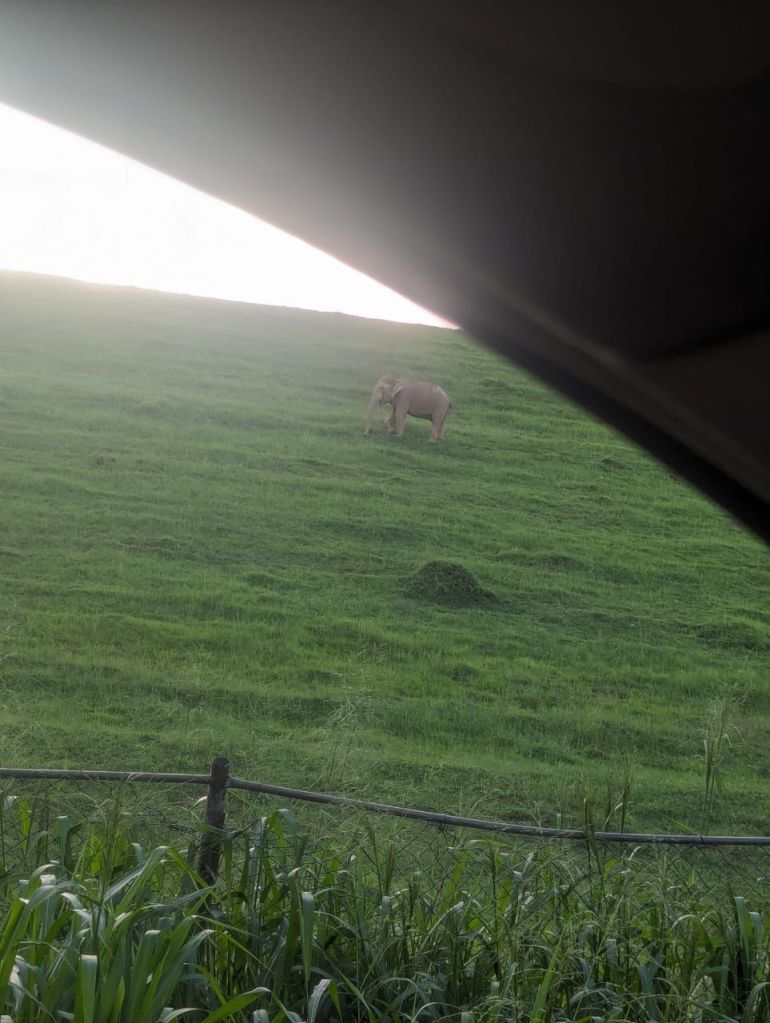
You are going to see a lot of paddy fields. It is likely your route is from Ampara Town, as other access roads to the reservior are not very developed. There are one or two smaller tanks on the way, yet nothing as big as in scale to the Senanayaka samudraya, as when you pass the dam, it feels like you are going across another mountain. The dam is filled with grass my friend told me he had seen elephants casually dinning, on the side of the road, and that is a common sight in afternoons. The Galoya National Park, which covers a majority of drainage area to the reservior, is a habitat for approx 200 elephants. Some of them are fond of human activity as they often encounter farmers and villagers. Yet it is dangerous, as they are truly wild elephants, its not like petting a dog or a cow a slight kick from their trunks will make you a rag doll, in a fraction of a second.
When you reach the top of the dam, you would face with the biggest waterbody in Srilanka, and the breathtaking view of mountains to the left, and the stretch of cultivated land to the right. Depending on the time of the day, and the day, there may or may not be a crowd. Generally buses from school trips from Eastern country, will be there with kids and teachers. A couple of ice cream vendors will follow the crowd on a sunny day.
I have seen some fancy boats out there with nobody riding. Yet I am sure if you talk to the lodge owners on the side of the lake they will arrange a boat ride for a reasonable price. Even without this experience the lake will make you feel small and humble.
But there you are gonna see a lot of evidence of wild elephants. Their smell and fresh dung scattered everywhere, and if in the afternoon, local folk will warn you when not to be there when elephants climb the rocks. Yes! They are fond of the Senanayake statue that every day they climb the staircase to meet him and show their gratitude. And there is one staircase only! Which you are gonna share with a wild elephant, so better be aware, as it’s a little narrow. But I haven’t heard anyone being attacked recently, maybe because everyone respects each others privacy here. But the elephant human conflict in other parts of the country that are far from having sustainable solutions, as discussed in our article about wild elephants.
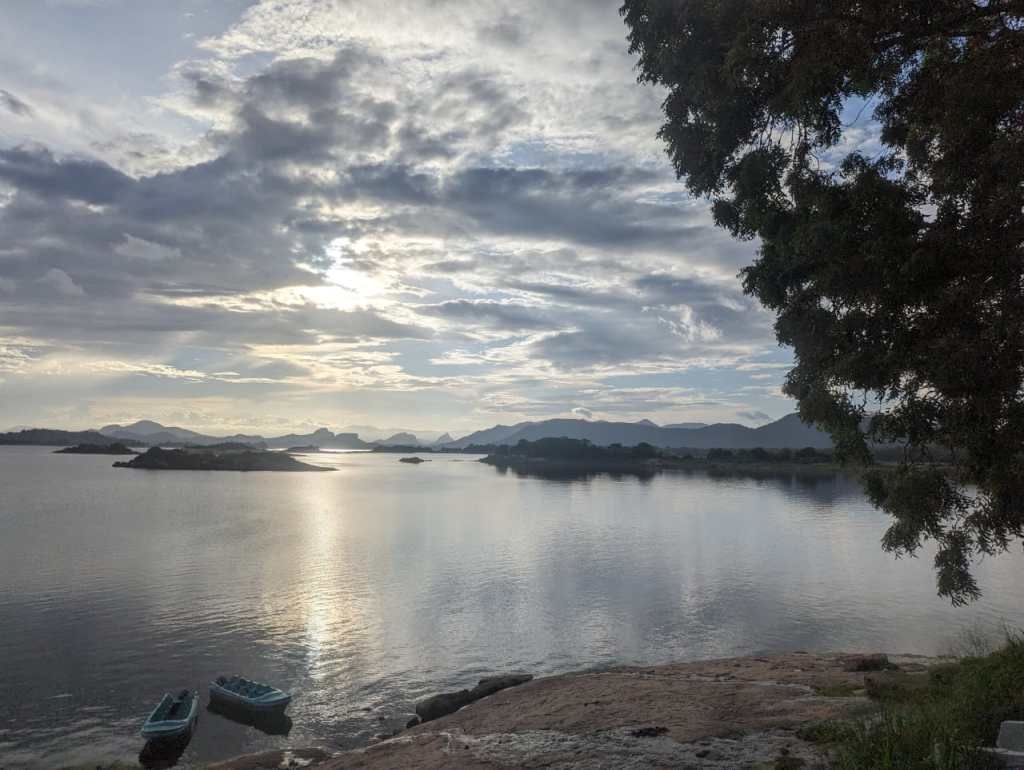
Fancy Boats at Stall

List of key facts about Senanayake Samudraya (also called Inginiyagala Reservior) in Sri Lanka:
📌 Basic Facts
- Location: Near Inginiyagala in the Ampara District, Eastern Province of Sri Lanka.
- River Source: Built by damming the Gal Oya River.
- Built Under: The Gal Oya Development Scheme, one of the first major irrigation and settlement schemes after independence.
- Construction Period: Began in 1949, completed in 1953.
- Named After: D. S. Senanayake, the first Prime Minister of Sri Lanka (then Ceylon), who initiated the project.
🌊 Physical Characteristics
- Type: Artificial reservoir / tank (Samudraya = ocean/lake in Sinhala).
- Surface Area: Around 9,000 hectares (varies by water level).
- Capacity: Approximately 770 million cubic meters (or 770 MCM) of water.
- Elevation: Around 110 meters above sea level.
- One of the Largest: It is the largest reservoir (by volume) in Sri Lanka.
🌾 Uses and Importance
- Main Purpose: Irrigation – supports agriculture in the Eastern Province.
- Irrigates: Over 40,000 hectares of farmland.
- Drinking Water: Provides water supply to nearby areas.
- Hydropower: Has a small hydropower unit.
- Fisheries: Supports inland fishing, contributing to local livelihoods.
🏞️ Ecology and Tourism
- Surrounded by: Gal Oya National Park, a biodiversity-rich protected area.
- Wildlife Sightings: Elephants can sometimes be seen swimming between islands.
- Tourism: Boat safaris are available, especially to see elephants and birds.
- Scenic Views: Features beautiful landscapes with mountains, islands, and forested surroundings.
- Cultural Sites Nearby: Close to historic and religious sites like Dighavapi and ancient Buddhist ruins.
 Silent observer
Leave a comment